6 min - BioSense Team - 2025-01-09
- LDL
- cholesterol
- cardiovascular
- prevention
- ESC
LDL Cholesterol: European Targets and How to Lower It
Disclaimer: This content is for informational purposes and does not replace medical advice.
In 30 Seconds
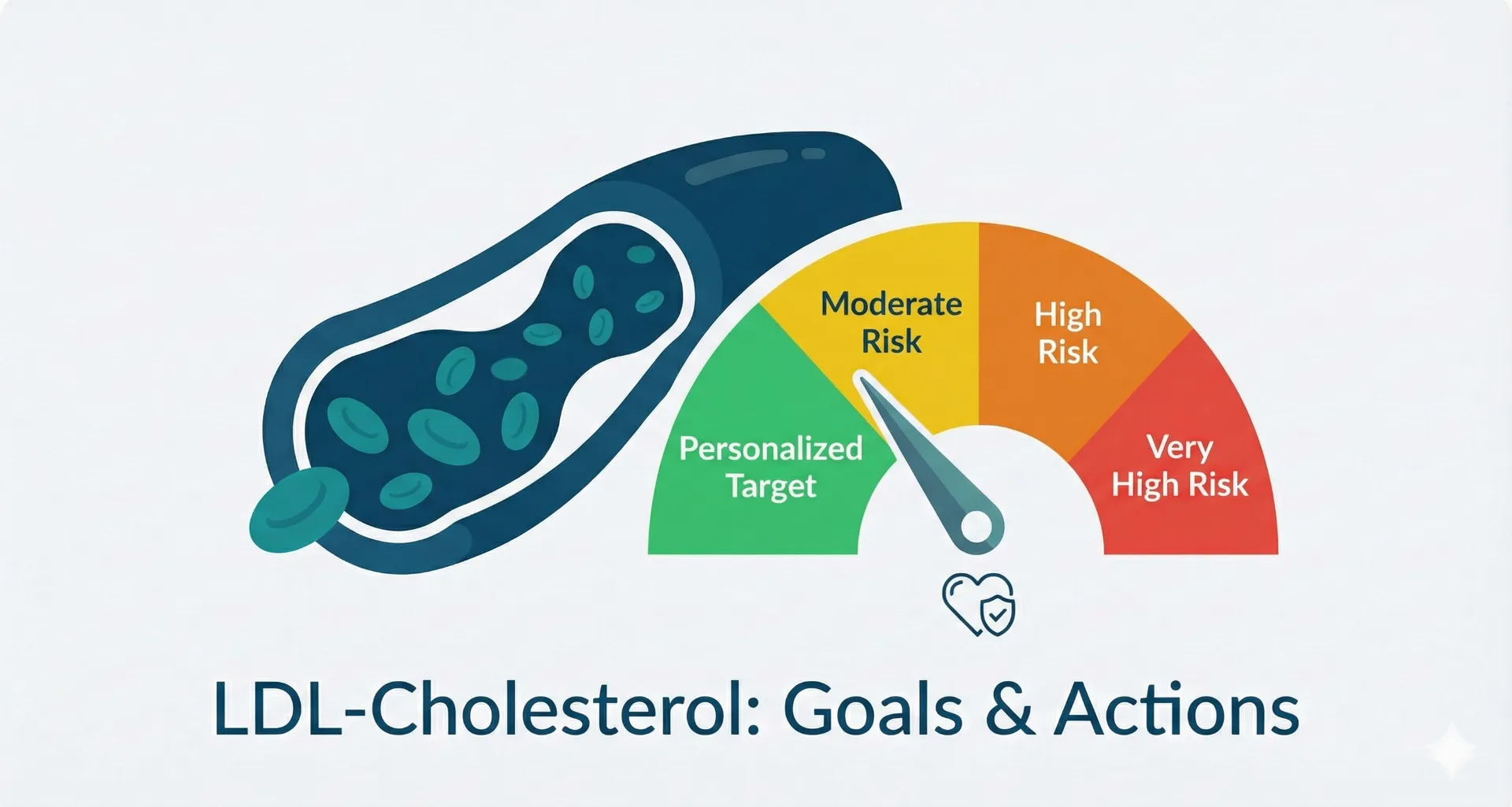
LDL cholesterol ("bad cholesterol") is one of the best indicators of atherosclerosis risk. The target varies for everyone: it depends on your overall cardiovascular risk (history, diabetes, smoking, blood pressure, age, etc.). European guidelines continue to aim for low targets in high-risk profiles.
What LDL Measures (Simply)
Think of LDL as trucks that transport cholesterol to tissues. When there's too much, some can accumulate in artery walls.
Realistic Targets in Practice (Europe)
European recommendations (ESC/EAS) include:
- Very high risk: LDL-C target < 1.4 mmol/L (55 mg/dL), often with ≥50% reduction from baseline.
- Some extremely high-risk profiles may aim lower (depending on clinical context).
Key point: it's not "high/low" in absolute terms. It's "high/low for you".
Why Is My LDL High?
Common causes:
- Saturated fats + ultra-processed foods (butter, deli meats, fatty cheeses, fried foods)
- Abdominal overweight / insulin resistance
- Sedentary lifestyle
- Genetics (familial hypercholesterolemia)
- Certain treatments or conditions (discuss with your doctor)
Taking Action (Without Overcomplicating)
- Mediterranean diet most of the time: vegetables, legumes, olive oil, fish, nuts.
- "Anti-LDL" fibers: oats, legumes, fruits.
- Move: aim for at least the activity recommendations (and ideally more).
- Weight: even moderate weight loss improves lipid profile.
- Follow-up: recheck based on your situation (often 3–6 months after changes).
BioSense — What the Report Gives You
- Context based on your profile (overall risk)
- Clear explanations + actionable plan (nutrition, activity, follow-up)
FAQ
### Is the "normal" LDL on my lab report enough? Not always: lab "reference ranges" don't necessarily reflect the prevention target for your risk level.
### Can I lower LDL without medication? Often yes, at least partially. But if you're at very high risk, the strategy depends on your doctor.
### Why does my LDL stay high despite a good diet? Genetics and individual biology play a major role: this is common.
### How do I import my lab results into BioSense? It's very simple. Once you receive the email from your laboratory, download your report in PDF format. On BioSense, click 'Send my report' and import the file. Our technology automatically analyzes the data to provide you with a clear summary.
### Does BioSense work with all laboratories? Yes, BioSense is compatible with all Medical Biology Laboratories (LBM) operating worldwide. Whether you had your blood test done at a large national network or an independent laboratory, you just need to send us the original PDF.
### Is my health data secure during import? Security is our absolute priority. Your data is hosted on secure servers in Europe, compliant with GDPR standards. BioSense uses complete encryption to ensure your information remains strictly private and confidential.
### What if my report is on paper and not in PDF? For optimal analysis with BioSense, we recommend using the digital PDF file provided by your laboratory on its patient portal. If you only have a paper version, you can scan it cleanly to PDF using your smartphone before importing.
Sources
- ESC/EAS – Dyslipidemia Guidelines – 2019 + Focused update 2025 (slides)
- ESC/EAS – LDL targets by risk – 2019
- WHO – Physical activity recommendations (150 min)
Related Articles
Learn more about triglycerides, blood pressure, CRP, and physical activity.